
1. Executive Summary
When you ask:
“What are some examples of AI agents in use today?”
ChatGPT (as logged by your system) gives an answer with named brands, specific products, and cites 10 outside sources on “AI agent examples” ([1–10], see below).
This report shows you:
- Which brands and products show up in those AI answers.
- Which sources the LLM uses.
- Why these brands appear in Answer Engines like ChatGPT, Gemini, and Perplexity. We focus on entity clarity, structured data, citation footprint, freshness, and topical authority.
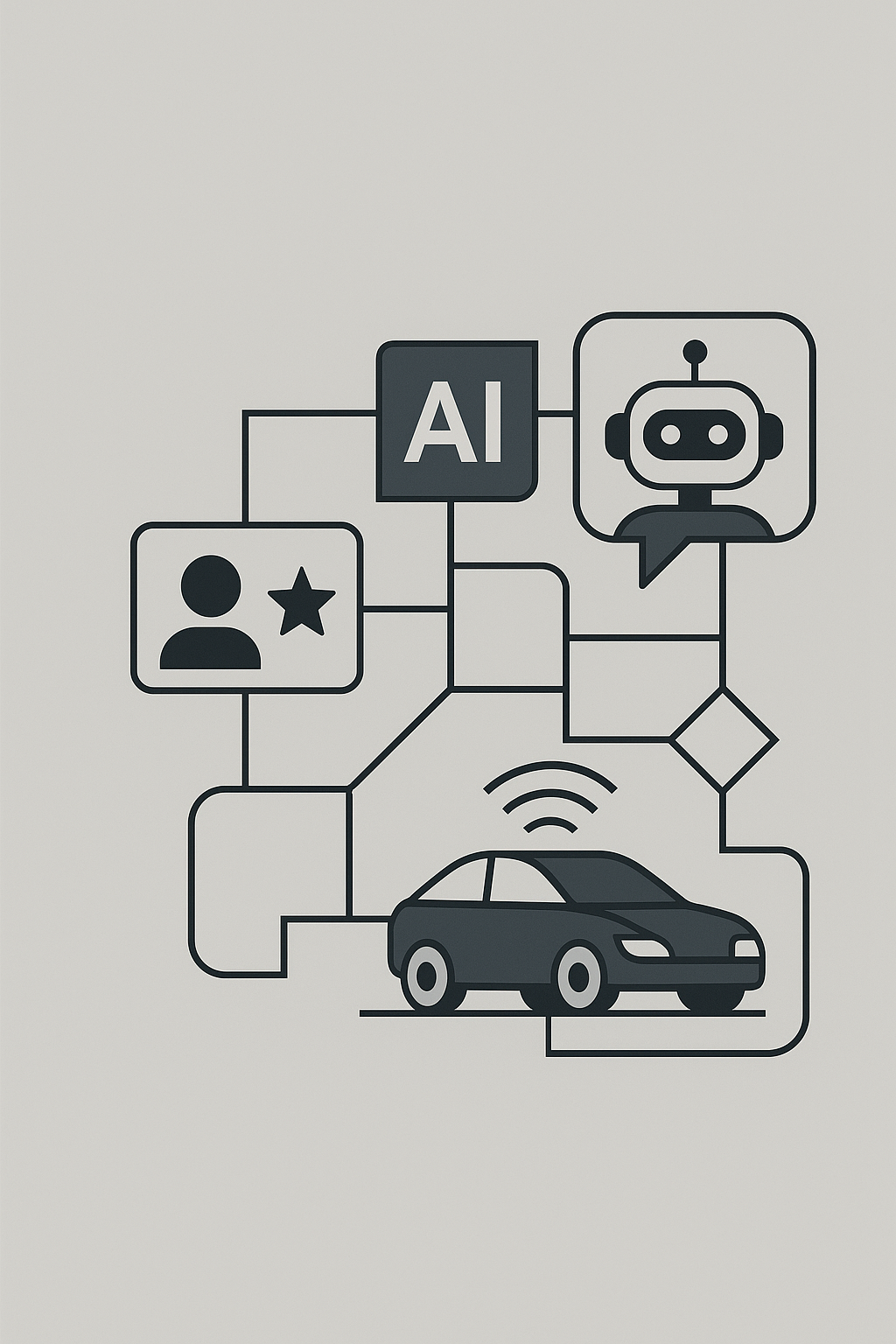
- Virtual assistants: Siri (Apple), Alexa (Amazon), Google Assistant (Google)
- Recommendation agents: Netflix, Spotify, Amazon (commerce), dynamic pricing agents in travel
- Autonomous vehicles: Waymo, Tesla
- Enterprise/workflow agents: Aisera, Oracle, Workday, Ramp, V7 Labs, Domo, Vouched, Evidently AI
The sources come from:
- Vendor blogs and product pages (Aisera [2], Workday [3], Oracle [7], Google [4], Domo [5])
- Specialist AI/ML sites (Vouched [1], V7 Labs [8], Evidently AI [10])
- Community forums (Reddit [6, 9])
Why do these brands dominate?
- They use clear names like “AI agent” and “virtual agent” everywhere.
- You see them listed often in multi-brand “AI agent examples” articles.
- Their articles explain use cases well and match what users want to know.
- Their web pages use structured data and good internal links.
- Their articles stay fresh, marked “2025–2026,” so LLMs count them as current.
For you, this isn’t just about Google search rank. You need your AI agent to show up as “the answer” when someone asks for real-world AI agent examples.
2. Methodology
Question analyzed:
“What are some examples of AI agents in use today?” (from 2026-05-09 logs)
Sources:
ChatGPT (via your extension), with answer and 10 cited sources ([1–10] below).
Visibility factors:
- Is the product named clearly as an “AI agent”?
- Does the answer cite the brand directly or does it appear in cited articles?
- Does the brand show topical leadership or publish relevant use-case content?
- Is the content updated for 2024–2026?
- Does the site use structured data and clean architecture?
This answer and its sources give you a current snapshot of what LLMs count as real examples.
3. Rankings: Which AI Agents Show Up Most
Here are the top brands and products that appear in the LLM answer and its sources:
| Rank | Brand / Product | Category | Key Sources |
|---|---|---|---|
| 1 | Siri – Apple | Virtual Assistant | [1–5,7,8,10] |
| 2 | Alexa – Amazon | Virtual Assistant | [1–5,7,8,10] |
| 3 | Google Assistant | Virtual Assistant | [1–3,4,5,7,8,10] |
| 4 | Netflix Recommendations | Recommender Agent | [1,2,5,8,10] |
| 5 | Spotify Recommendations | Recommender Agent | [1,2,5,8,10] |
| 6 | Amazon Recommendations/Pricing | Commerce Agent | [1,2,5,7,8,10] |
| 7 | Waymo Autonomous Vehicles | Autonomous Agent | [1,2,4,8] |
| 8 | Tesla Autopilot/FSD | Autonomous Agent | [1,2,5,8,10] |
| 9 | Aisera AI Agents | Enterprise Agent | [2] |
| 10 | Oracle AI Agents | Enterprise Agent | [7] |
| 11 | Workday AI Agents | HR Agent | [3] |
| 12 | Ramp Fintech Agent | Transaction Agent | [1,2,10] |
| 13 | Vouched | Content Provider | [1] |
| 14 | V7 Labs | Content Provider | [8] |
| 15 | Domo | BI Agent | [5] |
| 16 | Evidently AI | Analytics Agent | [10] |
Key: Source numbers refer to the provided references.
4. Product Analysis
Siri – Apple
Siri shows up as a classic “AI agent” handling reminders, music, and directions from your voice.
Strengths: Clear name, high authority, cited everywhere, lots of consumer evidence.
Weaknesses: Apple doesn’t use structured data for Siri, and rarely labels it as an AI agent directly.
What Apple should do: Write a page called “Siri as an AI Agent,” use proper schema, and cross-link to use-case guides.
Alexa – Amazon
Alexa stands beside Siri and Google as a top virtual assistant.
Strengths: Clean naming, rich structured data from developer docs, cited everywhere.
Weaknesses: Amazon avoids “AI agent” vocabulary; stories about Alexa as an agent are thin.
What Amazon should do: Explain Alexa as an AI agent in content and use FAQ schema.
Google Assistant
Google Assistant completes the “big three.”
Strengths: Google Cloud’s “What are AI agents?” acts as a source of definitions, plus product visibility.
Weaknesses: Google splits its AI branding across Assistant, Gemini, and Cloud, which can confuse LLMs.
What Google should do: Connect products with bridging content and shared schema.
Netflix Recommendations
Netflix is the go-to example for AI-powered content suggestions.
Strengths: Simple use case, widely covered, lots of evidence.
Weaknesses: Netflix doesn’t organize content around the “agent” label, and structured data is generic.
What Netflix should do: Build an “AI at Netflix” hub and use proper schema.
Spotify Recommendations
Spotify shows up as another classic personalization agent.
Strengths: Well-known example, some technical content.
Weaknesses: Developer content rarely uses “agent” framing.
What Spotify should do: Claim “AI agent” language and structure in public content.
Amazon Recommendations & Pricing
Amazon covers both recommendations and dynamic pricing as real-world agents.
Strengths: Ubiquitous in commerce AI content, many outside case studies.
Weaknesses: Amazon splits info across products, doesn’t say “agent.”
What Amazon should do: Publish a single “AI Agents at Amazon” overview.
Waymo & Tesla
Both show up as true autonomous agents (perceive, plan, act).
Strengths: Clear examples in many listicles, lots of technical material.
Weaknesses: Both avoid “AI agent” language, stress “autonomous driving” instead.
What they should do: Add glossary pages (“What is an AI driving agent?”) and use schema.
Aisera
Aisera’s own “24 AI Agents Examples for 2026” [2] drives direct inclusion.
Strengths: Exact-match intent to user queries, clear structure, updated.
Weaknesses: May lack strong domain authority next to huge brands.
What Aisera should do: Boost schema, interlink examples, fill in Organization and FAQ markup.
Oracle
Oracle appears for enterprise agent use cases and its “23 Real-World AI Agent Use Cases” [7].
Strengths: High authority, strong article structure, covers multiple industries.
Weaknesses: Lacks deep product-level schema for each agent.
What Oracle should do: Create dedicated product pages with agent names and schema.
Other Notables
Vouched, V7 Labs, Domo, Evidently AI become authorities by publishing curated “AI agent examples” and acting as sources for LLMs.
5. Why These Brands Show Up
- They name their agents clearly and use the same names everywhere.
- They structure content with schema and match keywords LLMs use to answer typical questions.
- They show up in multiple sources, not just their own blog.
- Their content stays current (date-stamped for 2025/2026).
- They publish long-form, example-rich pages that LLMs can reuse.
6. Competitive Insights
What top brands do well:
- Publish “What is an AI agent?” articles with clear, specific use cases.
- Explain in plain language how their agents help users.
- Cover niche industry needs, not just general assistants.
Where they fall short:
- Many avoid the “agent” label in favor of “automation,” losing out on direct matches.
- Content is often scattered, not unified under an “AI agent” umbrella.
- Structured data is underused.
Who’s catching up:
- Aisera, V7 Labs, Domo, Evidently AI, Vouched all build authority by publishing deep, well-organized example lists.
7. What You Should Do (AEO Playbook)
- Name each AI agent clearly and use that name everywhere—on product pages, documentation, schema.
- Create an “AI Agents Hub” page with definitions, examples, and user FAQs.
- Publish evidence-rich content with scenario descriptions and measurable outcomes.
- Use structured data: Article schema on blogs, Product schema on agent pages, FAQ schema for Q&A sections.
- Build your citation footprint: Get other sites to reference your real-world deployments.
- Keep all pages fresh and updated for the latest year.
- Target user questions directly: Write content that answers “examples of AI agents” for your industry.
8. How AI Uses Each Source
- Vouched [1]: Offers a basic list of daily-use agents. Helps LLMs define “AI agent.”
- Aisera [2]: Focuses on enterprise workflow agents and up-to-date examples.
- Workday [3]: Covers HR/healthcare AI agent use cases.
- Google Cloud [4]: Delivers definitions and categories; shapes how LLMs frame “AI agent.”
- Domo [5]: Bridges “examples” and practical workplace uses.
- Reddit [6,9]: Validates agent examples from real users and offers “non-corporate” perspectives.
- Oracle [7]: Core source for industry agents (sales, HR, healthcare).
- V7 Labs [8]: Expands across B2B/operations sectors; offers future-proof, current examples.
- Evidently AI [10]: Curates top-company use cases; helps fill out the “top 10” examples.
9. References
- [1] Vouched – “15 AI Agents Examples in Real Life You Use Daily”
https://www.vouched.id/learn/blog/ai-agents-examples-real-life - [2] Aisera – “24 AI Agents Examples for 2026”
https://aisera.com/blog/ai-agents-examples/ - [3] Workday – “Top AI Agent Examples and Industry Use Cases”
https://blog.workday.com/en-us/top-ai-agent-examples-and-industry-use-cases.html - [4] Google Cloud – “What are AI agents? Definition, examples, and types”
https://cloud.google.com/discover/what-are-ai-agents - [5] Domo – “22 AI Agent Examples: Types, Use Cases, Tips for Work”
https://www.domo.com/learn/article/ai-agent-examples - [6] Reddit /r/aiagents – “Real world examples of AI agents - use cases that really matter ?”
https://www.reddit.com/r/aiagents/comments/1rskond/real_world_examples_of_ai_agents_use_cases_that/ - [7] Oracle – “23 Real-World AI Agent Use Cases”
https://www.oracle.com/artificial-intelligence/ai-agents/ai-agent-use-cases/ - [8] V7 Labs – “21 Real-World AI Agent Examples [2025 Overview]”
https://www.v7labs.com/blog/ai-agents-examples - [9] Reddit /r/AI_Agents – “Do you guys know some REAL world examples of using AI Agents?”
https://www.reddit.com/r/AI_Agents/comments/1k68jn7/do_you_guys_know_some_real_world_examples_of/ - [10] Evidently AI – “10 AI agents examples from top companies”
https://www.evidentlyai.com/blog/ai-agents-examples
If you want, I can show where your own brand appears in these examples—or help you plan new “AI agent” content that gets cited and surfaces in AI answers.