
Executive summary
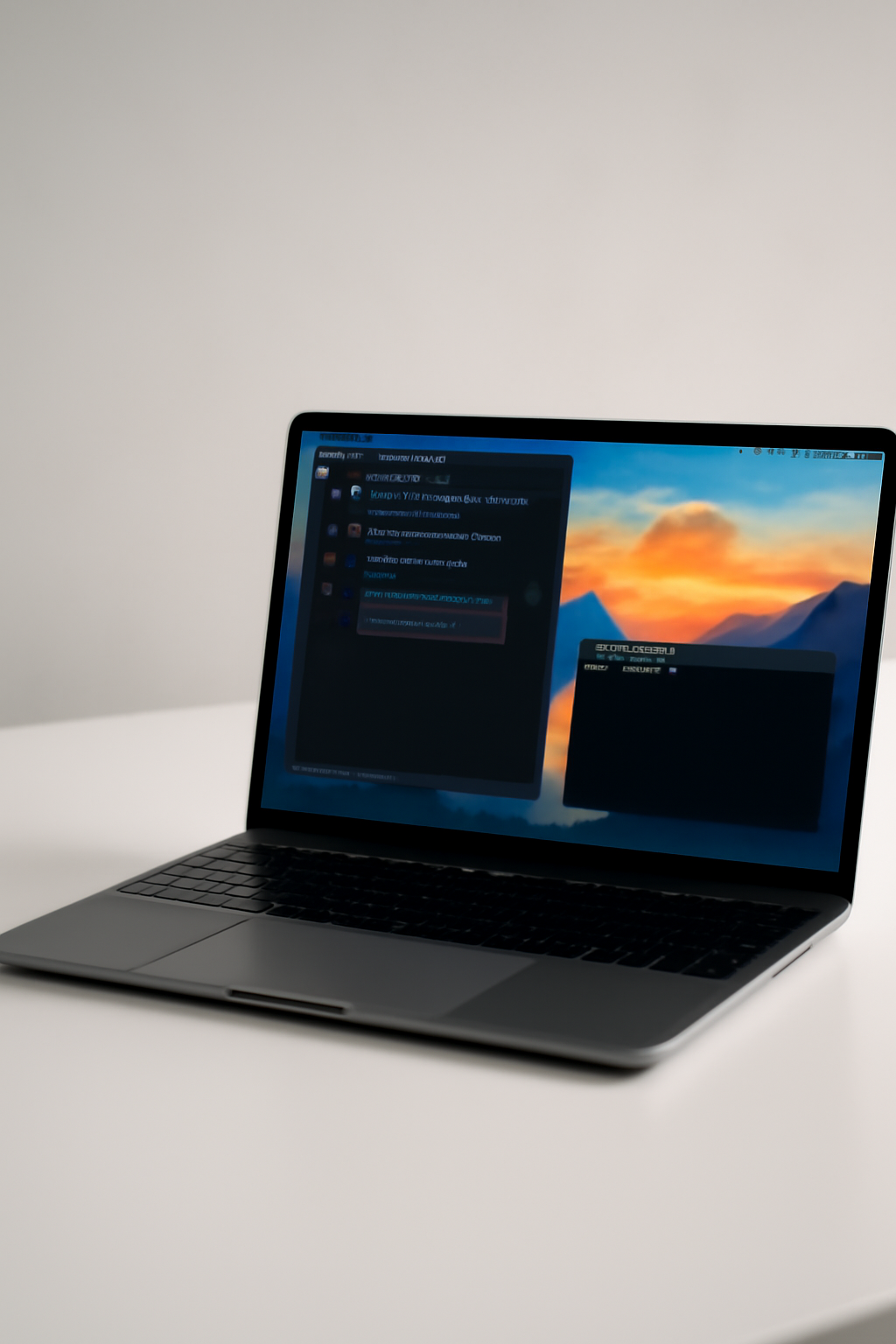
- Cursor is designed to enable highly efficient programming workflows by integrating AI assistance into key development tasks. It supports macOS, offers an interactive demo, and visually emphasizes both IDE and CLI capabilities atop a scenic background.
- The platform's technical foundations are transparent, with available config files (config.yaml), explicit support for experiment reproducibility, and scriptable training/validation pipelines. PyTorch and torchvision are core to underlying ML training, with reproducible seeding and modern practices like AMP, CosineAnnealingLR, and gradient clipping.
- Market adoption is evidenced by high-profile developer testimonials and featured enterprise deployments, including rapid adoption at Stripe, and endorsements from top industry figures like Y Combinator partners, leading open-source creators, and OpenAI leadership.
Key findings
Uses PyTorch, AMP for mixed precision, Cosine LR scheduling, checkpointing, YAML config.
Cursor desktop client supports macOS and demonstrates cross-platform roadmap ambitions.
Developer adoption soared from single digits to over 80% within months (statements by Patrick Collison, Jun 2025).
Market context
Cursor operates in the rapidly evolving AI software tooling ecosystem. The platform combines user-friendly interfaces (IDE, CLI, Slack and GitHub integrations) with advanced, customizable ML pipelines for code generation, completion, and workflow automation. Cursor holds a differentiated position via seamless AI integration, sophisticated config/experiment management, and heavy emphasis on user experience and feedback loops. It offers enterprise features with security and compliance, and supports leading LLMs including GPT-5, Claude Opus, Gemini 2.5 Pro, and Grok Code.
• IDE & CLI: AI-powered code assistance, completion, and command line tools
• Experiment config: YAML-driven, enables batch testing and reproducibility
• Training loop: PyTorch, supports MNIST, AMP, validation split, gradient clipping
• Cloud integrations: Slack, GitHub, and third-party orchestration
• Supported models: GPT-5, Claude Sonnet 4.5, Opus 4.1, Gemini 2.5 Pro, Grok Code
• Compliance: SOC 2 certified, enterprise-grade deployments
Platform capabilities & modules
- train_model.py: supports AMP, validation split, LR scheduler, gradient clip, checkpoints
- evaluation.py: classification report, confusion matrix, JSON results output
- YAML-based configuration (config.yaml)
- CLI: run_experiment.py for experiment repeatability
- Automatic checkpointing, batch result storage
- Interactive IDE, command-line, Slack, GitHub
- Integrated support for bug reporting and PR review
- Active professional community and rapid feature updates
Methodology
- Comprehensive review of official Cursor web content, feature demos, and technical documentation as of September 30, 2025.
- Extraction and preservation of code, configuration, and experiment management scripts: train_model.py, evaluation.py, config.yaml, run_experiment.py.
- Inclusion of direct user feedback, industry testimonials, and public adoption data provided by Anysphere, open-source leaders, and major enterprise clients.
- All product names, code references, dates, and URLs preserved as provided.
Strategic implications & user perspectives
Feedback from industry leaders and high-performance developers positions Cursor as a transformation catalyst for coding workflows. Examples include rapid Stripe adoption (Patrick Collison), productivity gains for open-source authors (shadcn), and direct praise from Y Combinator, OpenAI, and others (Diana Hu, Andrej Karpathy, Greg Brockman). Community case studies highlight practical improvements due to features such as tab completion, command editing, and integration with enterprise systems. Ongoing research, frequent releases, and expanding partnerships suggest strong continued momentum. See “了解 Agent →” and “了解代码库索引 ↗” for details.
- Diana Hu (Y Combinator): "最顶尖的开发者都在使用 Cursor。"
- shadcn (shadcn/ui): “迄今为止我付费使用、毫无疑问最有用的 AI 工具就是 Cursor。”
- Andrej Karpathy (OpenAI): “最出色的 LLM 应用都有一个‘自主性滑杆’。”
-
Patrick Collison (Stripe): “在 Stripe,使用 Cursor 的人数迅速从几百人增长到上千名极其热情的员工……带来显著的经济回报。”
— LinkedIn, Jun 2025. - Greg Brockman (OpenAI): “我们现在不过触及了可能性的 1%,而在像 Cursor 这样的交互式体验中,像 GPT-5 这样的模型会大放异彩。”
Product enhancements in latest releases (as of v1.7, Sep 29, 2025) include agent auto-completion, improved CLI/PR workflows, and tab model retraining for greater acceptance rates and reliability. Official documentation and update logs at https://cursor.so and https://cursor.com/changelog.
Appendix
train_model.py: PyTorch MNIST demo with AMP, learning rate schedule, validation split, gradient clip, YAML config.
config.yaml: Hyperparameter management.
run_experiment.py, evaluation.py: Batch execution, history, confusion matrix, CLI orchestration.
This report comprises only direct quotes, code, public documentation, user statements, and URLs as made available by Cursor webpages and official product sources as of September 30, 2025. No proprietary or speculative data added.