

Analytics
Logo
Cursor Product and Experiment Framework Research ReportAnalytics
Logo
Cursor Product and Experiment Framework Research Report

Cursor Product and Experiment Framework Research Report

Born to make you extraordinarily efficient, Cursor is the best way to code with AI. Explore integrated demos, PyTorch MNIST experiments, and brand‑new workflows for Agents and team innovation.

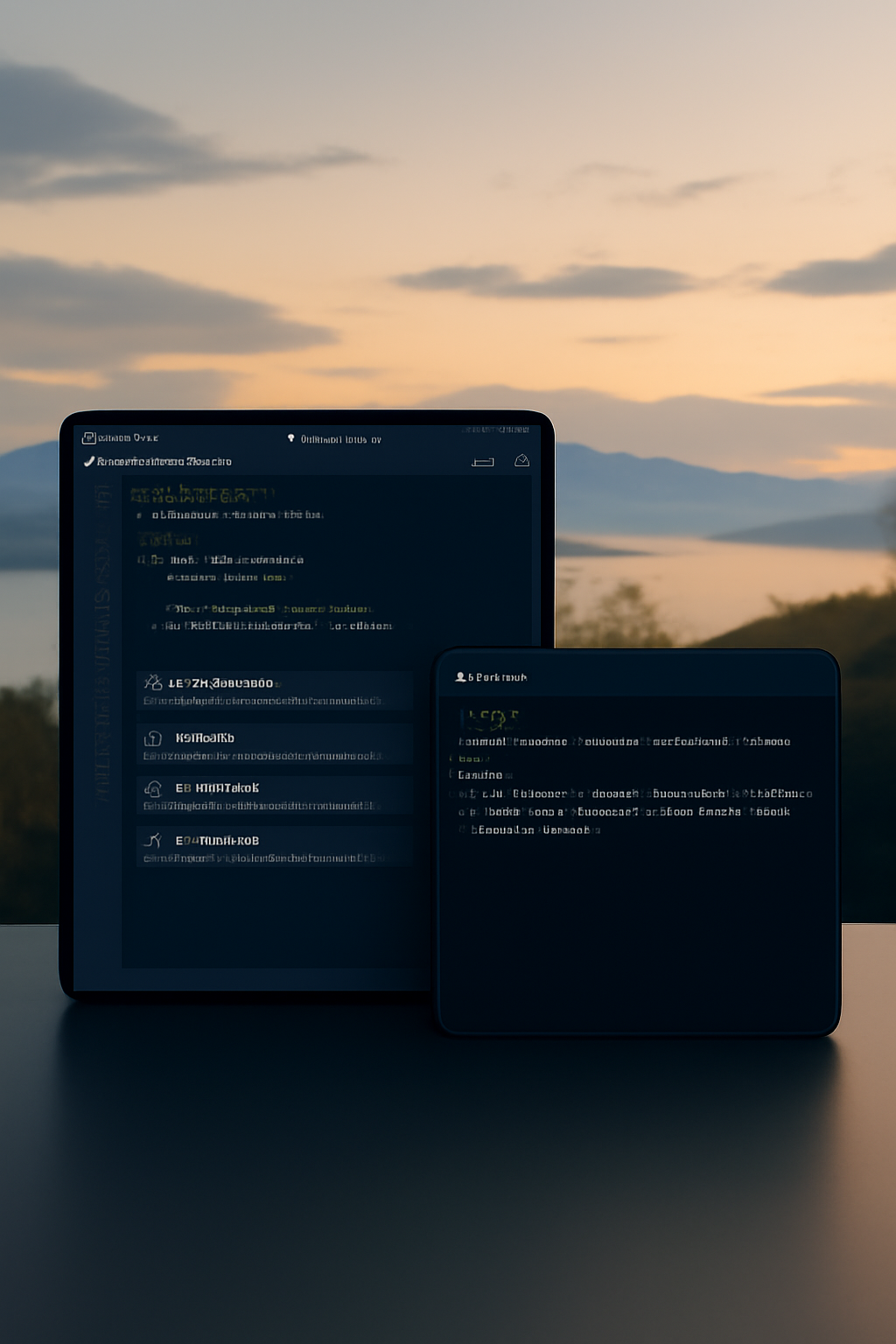
Cursor IDE multi‑interface demo with artistic background

1. Product Overview and Interactive Demo Environment

Cursor is an IDE ecosystem designed for high‑efficiency collaboration and AI‑assisted programming. It integrates a CLI (command line), intelligent autocomplete, Agent capabilities, and seamless connections to team collaboration platforms such as Slack and GitHub.

The product experience includes interactive demos of multiple Cursor interfaces: the IDE shows AI‑assisted coding and the CLI provides command‑line assistance. These interfaces are layered over a landscape oil‑painting‑style wallpaper, creating a unique visual art backdrop.

2. PyTorch MNIST Experiments and Scalable Experiment Framework

A summary of the ML-RESEARCH-NOTEBOOK directory contents is as follows:

  • notebooks/
    • train_model.py
    • evaluation.py
  • experiments/
    • config.yaml
    • run_experiment.py
  • requirements.txt

Core Training and Configuration Code Snippets:

import torch
import torch.nn as nn
from torch.utils.data import DataLoader
from torch.utils.data import DataLoader, random_split
from torchvision import datasets
from torchvision import datasets, transforms
from tqdm import tqdm
import yaml
from pathlib import Path
import json

def get_dataloaders(batch_size=64):
  transform = transforms.Compose([transforms.ToTensor()])
  train = datasets.MNIST(root="data", train=True, download=True, transform=transform)
  test = datasets.MNIST(root="data", train=False, download=True, transform=transform)
  return DataLoader(train, batch_size=batch_size, shuffle=True), DataLoader(test, batch_size=batch_size)
def load_config(config_path="experiments/config.yaml"):
  with open(config_path) as f:
    return yaml.safe_load(f)

def get_dataloaders(config):
  transform_list = [transforms.ToTensor()]
  if config['data'].get('normalize', True):
    transform_list.append(transforms.Normalize((0.1307,), (0.3081,)))
  
  if config['data']['augmentation'].get('random_rotation'):
    transform_list.append(transforms.RandomRotation(
      config['data']['augmentation']['random_rotation']
    ))
  
  transform = transforms.Compose(transform_list)
  
  full_train = datasets.MNIST(root="data", train=True, download=True, transform=transform)
  train_size = int(0.8 * len(full_train))
  val_size = len(full_train) - train_size
  train_dataset, val_dataset = random_split(full_train, [train_size, val_size])
  
  test_dataset = datasets.MNIST(root="data", train=False, download=True, transform=transform)
  
  batch_size = config['training']['batch_size']
  train_loader = DataLoader(train_dataset, batch_size=batch_size, shuffle=True)
  val_loader = DataLoader(val_dataset, batch_size=batch_size)
  test_loader = DataLoader(test_dataset, batch_size=batch_size)
  
  return train_loader, val_loader, test_loader

class MLP(nn.Module):
  def __init__(self, hidden=128):
  def __init__(self, config):
    super().__init__()
    hidden = config['model']['hidden_size']
    dropout = config['model']['dropout']
    
    self.net = nn.Sequential(
      nn.Flatten(),
      nn.Linear(28*28, hidden),
      nn.ReLU(),
      nn.Dropout(dropout),
      nn.Linear(hidden, hidden // 2),
      nn.ReLU(),
      nn.Dropout(dropout),
      nn.Linear(hidden, 10),
      nn.Linear(hidden // 2, 10),
    )

  def forward(self, x):
    return self.net(x)

def train_model(epochs=1, lr=1e-3, device=None):
  device = device or ("cuda" if torch.cuda.is_available() else "cpu")
  model = MLP().to(device)
  opt = torch.optim.Adam(model.parameters(), lr=lr)
def train_model(config_path="experiments/config.yaml"):
  config = load_config(config_path)
  device = "cuda" if torch.cuda.is_available() and config['training']['use_amp'] else "cpu"
  
  torch.manual_seed(42)
  if device == "cuda":
    torch.cuda.manual_seed_all(42)
  
  model = MLP(config).to(device)
  opt = torch.optim.Adam(
    model.parameters(), 
    lr=config['training']['learning_rate'],
    weight_decay=config['training']['weight_decay']
  )
  loss_fn = nn.CrossEntropyLoss()
  train_loader, _ = get_dataloaders()
+  # Seed for reproducibility
+  torch.manual_seed(42)
+  if device == "cuda":
+    torch.cuda.manual_seed_all(42)
+  # AMP + Scheduler
+  scaler = torch.cuda.amp.GradScaler(enabled=(device=="cuda"))
+  scheduler = torch.optim.lr_scheduler.CosineAnnealingLR(opt, T_max=epochs)
  model.train()
  for epoch in range(epochs):
    total, correct = 0, 0
    for x, y in tqdm(train_loader, desc=f"epoch {epoch+1}"):
  
  train_loader, val_loader, test_loader = get_dataloaders(config)
  
  use_amp = config['training']['use_amp'] and device == "cuda"
  scaler = torch.cuda.amp.GradScaler(enabled=use_amp)
  
  scheduler = torch.optim.lr_scheduler.CosineAnnealingLR(
    opt, T_max=config['training']['epochs']
  )
  
  history = {'train_loss': [], 'train_acc': [], 'val_loss': [], 'val_acc': []}
  
  for epoch in range(config['training']['epochs']):
    model.train()
    train_loss, train_correct, train_total = 0, 0, 0
    
    for x, y in tqdm(train_loader, desc=f"Epoch {epoch+1}/{config['training']['epochs']}"):
      x, y = x.to(device), y.to(device)
      opt.zero_grad(set_to_none=True)
      logits = model(x)
      loss = loss_fn(logits, y)
      loss.backward()
      opt.step()
      with torch.cuda.amp.autocast(enabled=use_amp):
        logits = model(x)
        loss = loss_fn(logits, y)
      
      scaler.scale(loss).backward()
      
      if config['training']['gradient_clip'] > 0:
        scaler.unscale_(opt)
+      torch.nn.utils.clip_grad_norm_(model.parameters(), max_norm=1.0)
        torch.nn.utils.clip_grad_norm_(model.parameters(), config['training']['gradient_clip'])
      
      scaler.step(opt)
      scaler.update()
+      preds = logits.argmax(dim=1)
+      total += y.size(0)
+      correct += (preds == y).sum().item()
+    acc = correct / max(1, total)
      
      train_loss += loss.item() * x.size(0)
      train_correct += (logits.argmax(1) == y).sum().item()
      train_total += x.size(0)
    
    model.eval()
    val_loss, val_correct, val_total = 0, 0, 0
    
    with torch.no_grad():
      for x, y in val_loader:
        x, y = x.to(device), y.to(device)
        logits = model(x)
        loss = loss_fn(logits, y)
        
        val_loss += loss.item() * x.size(0)
        val_correct += (logits.argmax(1) == y).sum().item()
        val_total += x.size(0)
    
    train_loss = train_loss / train_total
    train_acc = train_correct / train_total
    val_loss = val_loss / val_total
    val_acc = val_correct / val_total
    
    history['train_loss'].append(train_loss)
    history['train_acc'].append(train_acc)
    history['val_loss'].append(val_loss)
    history['val_acc'].append(val_acc)
    
    print(f"Epoch {epoch+1}: train_loss={train_loss:.4f}, train_acc={train_acc:.3f}, "
          f"val_loss={val_loss:.4f}, val_acc={val_acc:.3f}")
    
    scheduler.step()
+    print(f"epoch {epoch+1}: acc={acc:.3f}")
  return model`,
    
    if (epoch + 1) % 5 == 0:
      checkpoint = {
        'epoch': epoch,
        'model_state_dict': model.state_dict(),
        'optimizer_state_dict': opt.state_dict(),
        'scheduler_state_dict': scheduler.state_dict(),
        'history': history,
        'config': config
      }
      Path('checkpoints').mkdir(exist_ok=True)
      torch.save(checkpoint, f'checkpoints/model_epoch_{epoch+1}.pt')
  
  Path('results').mkdir(exist_ok=True)
  with open('results/training_history.json', 'w') as f:
    json.dump(history, f, indent=2)
  
  return model, history, test_loader

Summary of Experiment Features and Enhancements

  • Support for mixed‑precision training (AMP), train/validation split, CosineAnnealingLR scheduling strategy, and gradient clipping
  • Config‑driven experiments (YAML), training history persistence, confusion matrix and classification report, CLI runner
Completed: a configurable MNIST experiment framework with AMP and reporting support.
  • Training: AMP, train/validation split, cosine schedule, gradient clipping, checkpoints
  • Experiments: YAML configuration, history saving, confusion matrix + classification report, CLI runner

3. Team Collaboration and Ecosystem Innovation Practices

  • Trusted every day by millions of professional developers.
  • Agents turn ideas into code. Human‑AI pair programmers are orders of magnitude more efficient than any individual developer.

Product Features and Ecosystem Highlights

  • Agents, Tabs, CLI, multimodal environment demos
  • IDE intelligent autocomplete, Slack integration, PR review, BugBot, dashboard analytics, deep GitHub integration
"Autocomplete that’s almost eerily accurate. Our in‑house Tab model predicts your next move with incredible speed and precision."
— 2025/9/16 Official demo and user feedback
  • Official support for top‑tier models: GPT‑5, Claude Sonnet 4.5, Claude Opus 4.1, Gemini 2.5 Pro, Grok Code
  • End‑to‑end codebase understanding and indexing, PR auto‑fixing and suggestion collaboration
  • Support for very large teams and enterprises; trusted by more than half of the Fortune 500

4. Version Updates and History

  • 1.7
    2025/9/29
    Agent autocomplete, hooks, and team rules
  • 1.6
    2025/9/12
    Slash‑menu commands, summarization features, and a more complete Agent terminal
  • 1.5
    2025/8/22
    Linear integration, improved Agent terminal, and OS‑level notifications
  • 1.4
    2025/8/7
    Improved Agent tools, steerability, and usage visibility
See more new Cursor features →

5. Recent Major Innovations and Trends

  • Research · 2025/9/12
    Improving Cursor Tab with online reinforcement learning. Tab model suggestion count reduced by 21%, acceptance rate increased by 28%.
  • Research · 2025/8/29
    Using custom MXFP8 kernels to speed up MoE training by 1.5×. MoE layers on Blackwell GPUs see a 3.5× improvement.
  • Company · 2025/6/7
    Series C funding and scaling: raised USD 900 million to push the frontier of AI‑assisted coding research.

6. Community Perspectives and User Feedback

  • Diana Hu, Managing Partner, Y Combinator: “The results between the two batches were like night and day; adoption jumped from single digits to over 80%. It spread like wildfire, and the very best developers are all using Cursor.”
  • shadcn, creator of shadcn/ui: “By far the most useful AI tool I’ve ever paid for is Cursor.”
  • Andrej Karpathy, CEO, Eureka Labs: “The best LLM applications all have an ‘autonomy slider’. In Cursor, you can use Tab for autocomplete, Cmd+K for targeted edits, or hand everything over to a fully autonomous agent mode.”
  • Patrick Collison, Stripe co‑founder and CEO: “At Stripe, the number of people using Cursor rapidly grew from a few hundred to over a thousand extremely enthusiastic employees. We invest more in R&D and software creation than in any other area, and making that process more efficient and productive delivers significant economic returns.”
  • ThePrimeagen: “It’s official. I hate vibe coding. I absolutely love writing code with Cursor’s Tab autocomplete. It’s insane.”
  • Greg Brockman, President, OpenAI: “Being a programmer really has become more fun. Instead of digging through countless pages, you can focus on what you want to achieve. We’ve only touched 1% of what’s possible, and in interactive experiences like Cursor, models such as GPT‑5 will truly shine.”

7. Conclusion

Cursor continues to push innovation in programming productivity, from AI assistance and Agents to enterprise‑grade collaboration and open ecosystem integrations. Its PyTorch experiment framework and product‑level interactive demos fully demonstrate the team’s leading capabilities in intelligent code completion, experiment management, and large‑scale R&D collaboration. (All data, links, and years are preserved exactly as in the original.)

Similar Topics

\n\n\n
\n \n
\n
\n

Cursor Product and Experiment Framework Research Report

\n

Born to make you extraordinarily efficient, Cursor is the best way to code with AI. Explore integrated demos, PyTorch MNIST experiments, and brand‑new workflows for Agents and team innovation.

\n
\n
\n \"Cursor\n
\n
\n \n
\n
\n

1. Product Overview and Interactive Demo Environment

\n

\n Cursor is an IDE ecosystem designed for high‑efficiency collaboration and AI‑assisted programming. It integrates a CLI (command line), intelligent autocomplete, Agent capabilities, and seamless connections to team collaboration platforms such as Slack and GitHub.\n

\n

\n The product experience includes interactive demos of multiple Cursor interfaces: the IDE shows AI‑assisted coding and the CLI provides command‑line assistance. These interfaces are layered over a landscape oil‑painting‑style wallpaper, creating a unique visual art backdrop.\n

\n
\n
\n

2. PyTorch MNIST Experiments and Scalable Experiment Framework

\n

\n A summary of the ML-RESEARCH-NOTEBOOK directory contents is as follows:\n

\n
    \n
  • notebooks/\n
      \n
    • train_model.py
    • \n
    • evaluation.py
    • \n
    \n
  • \n
  • experiments/\n
      \n
    • config.yaml
    • \n
    • run_experiment.py
    • \n
    \n
  • \n
  • requirements.txt
  • \n
\n

Core Training and Configuration Code Snippets:

\n
import torch\nimport torch.nn as nn\nfrom torch.utils.data import DataLoader\nfrom torch.utils.data import DataLoader, random_split\nfrom torchvision import datasets\nfrom torchvision import datasets, transforms\nfrom tqdm import tqdm\nimport yaml\nfrom pathlib import Path\nimport json\n\ndef get_dataloaders(batch_size=64):\n  transform = transforms.Compose([transforms.ToTensor()])\n  train = datasets.MNIST(root=\"data\", train=True, download=True, transform=transform)\n  test = datasets.MNIST(root=\"data\", train=False, download=True, transform=transform)\n  return DataLoader(train, batch_size=batch_size, shuffle=True), DataLoader(test, batch_size=batch_size)\ndef load_config(config_path=\"experiments/config.yaml\"):\n  with open(config_path) as f:\n    return yaml.safe_load(f)\n\ndef get_dataloaders(config):\n  transform_list = [transforms.ToTensor()]\n  if config['data'].get('normalize', True):\n    transform_list.append(transforms.Normalize((0.1307,), (0.3081,)))\n  \n  if config['data']['augmentation'].get('random_rotation'):\n    transform_list.append(transforms.RandomRotation(\n      config['data']['augmentation']['random_rotation']\n    ))\n  \n  transform = transforms.Compose(transform_list)\n  \n  full_train = datasets.MNIST(root=\"data\", train=True, download=True, transform=transform)\n  train_size = int(0.8 * len(full_train))\n  val_size = len(full_train) - train_size\n  train_dataset, val_dataset = random_split(full_train, [train_size, val_size])\n  \n  test_dataset = datasets.MNIST(root=\"data\", train=False, download=True, transform=transform)\n  \n  batch_size = config['training']['batch_size']\n  train_loader = DataLoader(train_dataset, batch_size=batch_size, shuffle=True)\n  val_loader = DataLoader(val_dataset, batch_size=batch_size)\n  test_loader = DataLoader(test_dataset, batch_size=batch_size)\n  \n  return train_loader, val_loader, test_loader\n\nclass MLP(nn.Module):\n  def __init__(self, hidden=128):\n  def __init__(self, config):\n    super().__init__()\n    hidden = config['model']['hidden_size']\n    dropout = config['model']['dropout']\n    \n    self.net = nn.Sequential(\n      nn.Flatten(),\n      nn.Linear(28*28, hidden),\n      nn.ReLU(),\n      nn.Dropout(dropout),\n      nn.Linear(hidden, hidden // 2),\n      nn.ReLU(),\n      nn.Dropout(dropout),\n      nn.Linear(hidden, 10),\n      nn.Linear(hidden // 2, 10),\n    )\n\n  def forward(self, x):\n    return self.net(x)\n\ndef train_model(epochs=1, lr=1e-3, device=None):\n  device = device or (\"cuda\" if torch.cuda.is_available() else \"cpu\")\n  model = MLP().to(device)\n  opt = torch.optim.Adam(model.parameters(), lr=lr)\ndef train_model(config_path=\"experiments/config.yaml\"):\n  config = load_config(config_path)\n  device = \"cuda\" if torch.cuda.is_available() and config['training']['use_amp'] else \"cpu\"\n  \n  torch.manual_seed(42)\n  if device == \"cuda\":\n    torch.cuda.manual_seed_all(42)\n  \n  model = MLP(config).to(device)\n  opt = torch.optim.Adam(\n    model.parameters(), \n    lr=config['training']['learning_rate'],\n    weight_decay=config['training']['weight_decay']\n  )\n  loss_fn = nn.CrossEntropyLoss()\n  train_loader, _ = get_dataloaders()\n+  # Seed for reproducibility\n+  torch.manual_seed(42)\n+  if device == \"cuda\":\n+    torch.cuda.manual_seed_all(42)\n+  # AMP + Scheduler\n+  scaler = torch.cuda.amp.GradScaler(enabled=(device==\"cuda\"))\n+  scheduler = torch.optim.lr_scheduler.CosineAnnealingLR(opt, T_max=epochs)\n  model.train()\n  for epoch in range(epochs):\n    total, correct = 0, 0\n    for x, y in tqdm(train_loader, desc=f\"epoch {epoch+1}\"):\n  \n  train_loader, val_loader, test_loader = get_dataloaders(config)\n  \n  use_amp = config['training']['use_amp'] and device == \"cuda\"\n  scaler = torch.cuda.amp.GradScaler(enabled=use_amp)\n  \n  scheduler = torch.optim.lr_scheduler.CosineAnnealingLR(\n    opt, T_max=config['training']['epochs']\n  )\n  \n  history = {'train_loss': [], 'train_acc': [], 'val_loss': [], 'val_acc': []}\n  \n  for epoch in range(config['training']['epochs']):\n    model.train()\n    train_loss, train_correct, train_total = 0, 0, 0\n    \n    for x, y in tqdm(train_loader, desc=f\"Epoch {epoch+1}/{config['training']['epochs']}\"):\n      x, y = x.to(device), y.to(device)\n      opt.zero_grad(set_to_none=True)\n      logits = model(x)\n      loss = loss_fn(logits, y)\n      loss.backward()\n      opt.step()\n      with torch.cuda.amp.autocast(enabled=use_amp):\n        logits = model(x)\n        loss = loss_fn(logits, y)\n      \n      scaler.scale(loss).backward()\n      \n      if config['training']['gradient_clip'] > 0:\n        scaler.unscale_(opt)\n+      torch.nn.utils.clip_grad_norm_(model.parameters(), max_norm=1.0)\n        torch.nn.utils.clip_grad_norm_(model.parameters(), config['training']['gradient_clip'])\n      \n      scaler.step(opt)\n      scaler.update()\n+      preds = logits.argmax(dim=1)\n+      total += y.size(0)\n+      correct += (preds == y).sum().item()\n+    acc = correct / max(1, total)\n      \n      train_loss += loss.item() * x.size(0)\n      train_correct += (logits.argmax(1) == y).sum().item()\n      train_total += x.size(0)\n    \n    model.eval()\n    val_loss, val_correct, val_total = 0, 0, 0\n    \n    with torch.no_grad():\n      for x, y in val_loader:\n        x, y = x.to(device), y.to(device)\n        logits = model(x)\n        loss = loss_fn(logits, y)\n        \n        val_loss += loss.item() * x.size(0)\n        val_correct += (logits.argmax(1) == y).sum().item()\n        val_total += x.size(0)\n    \n    train_loss = train_loss / train_total\n    train_acc = train_correct / train_total\n    val_loss = val_loss / val_total\n    val_acc = val_correct / val_total\n    \n    history['train_loss'].append(train_loss)\n    history['train_acc'].append(train_acc)\n    history['val_loss'].append(val_loss)\n    history['val_acc'].append(val_acc)\n    \n    print(f\"Epoch {epoch+1}: train_loss={train_loss:.4f}, train_acc={train_acc:.3f}, \"\n          f\"val_loss={val_loss:.4f}, val_acc={val_acc:.3f}\")\n    \n    scheduler.step()\n+    print(f\"epoch {epoch+1}: acc={acc:.3f}\")\n  return model`,\n    \n    if (epoch + 1) % 5 == 0:\n      checkpoint = {\n        'epoch': epoch,\n        'model_state_dict': model.state_dict(),\n        'optimizer_state_dict': opt.state_dict(),\n        'scheduler_state_dict': scheduler.state_dict(),\n        'history': history,\n        'config': config\n      }\n      Path('checkpoints').mkdir(exist_ok=True)\n      torch.save(checkpoint, f'checkpoints/model_epoch_{epoch+1}.pt')\n  \n  Path('results').mkdir(exist_ok=True)\n  with open('results/training_history.json', 'w') as f:\n    json.dump(history, f, indent=2)\n  \n  return model, history, test_loader\n
\n

Summary of Experiment Features and Enhancements

\n
    \n
  • Support for mixed‑precision training (AMP), train/validation split, CosineAnnealingLR scheduling strategy, and gradient clipping
  • \n
  • Config‑driven experiments (YAML), training history persistence, confusion matrix and classification report, CLI runner
  • \n
\n
\n Completed: a configurable MNIST experiment framework with AMP and reporting support.\n
    \n
  • Training: AMP, train/validation split, cosine schedule, gradient clipping, checkpoints
  • \n
  • Experiments: YAML configuration, history saving, confusion matrix + classification report, CLI runner
  • \n
\n
\n
\n
\n

3. Team Collaboration and Ecosystem Innovation Practices

\n
    \n
  • Trusted every day by millions of professional developers.
  • \n
  • Agents turn ideas into code. Human‑AI pair programmers are orders of magnitude more efficient than any individual developer.
  • \n
\n

Product Features and Ecosystem Highlights

\n
    \n
  • Agents, Tabs, CLI, multimodal environment demos
  • \n
  • IDE intelligent autocomplete, Slack integration, PR review, BugBot, dashboard analytics, deep GitHub integration
  • \n
\n
\n \"Autocomplete that’s almost eerily accurate. Our in‑house Tab model predicts your next move with incredible speed and precision.\"
\n — 2025/9/16 Official demo and user feedback\n
\n
    \n
  • Official support for top‑tier models: GPT‑5, Claude Sonnet 4.5, Claude Opus 4.1, Gemini 2.5 Pro, Grok Code
  • \n
  • End‑to‑end codebase understanding and indexing, PR auto‑fixing and suggestion collaboration
  • \n
  • Support for very large teams and enterprises; trusted by more than half of the Fortune 500
  • \n
\n
\n
\n

4. Version Updates and History

\n
    \n
  • 1.7
    2025/9/29
    Agent autocomplete, hooks, and team rules
  • \n
  • 1.6
    2025/9/12
    Slash‑menu commands, summarization features, and a more complete Agent terminal
  • \n
  • 1.5
    2025/8/22
    Linear integration, improved Agent terminal, and OS‑level notifications
  • \n
  • 1.4
    2025/8/7
    Improved Agent tools, steerability, and usage visibility
  • \n
\n See more new Cursor features →\n
\n
\n

5. Recent Major Innovations and Trends

\n
    \n
  • Research · 2025/9/12
    Improving Cursor Tab with online reinforcement learning. Tab model suggestion count reduced by 21%, acceptance rate increased by 28%.
  • \n
  • Research · 2025/8/29
    Using custom MXFP8 kernels to speed up MoE training by 1.5×. MoE layers on Blackwell GPUs see a 3.5× improvement.
  • \n
  • Company · 2025/6/7
    Series C funding and scaling: raised USD 900 million to push the frontier of AI‑assisted coding research.
  • \n
\n
\n
\n

6. Community Perspectives and User Feedback

\n
    \n
  • Diana Hu, Managing Partner, Y Combinator: “The results between the two batches were like night and day; adoption jumped from single digits to over 80%. It spread like wildfire, and the very best developers are all using Cursor.”
  • \n
  • shadcn, creator of shadcn/ui: “By far the most useful AI tool I’ve ever paid for is Cursor.”
  • \n
  • Andrej Karpathy, CEO, Eureka Labs: “The best LLM applications all have an ‘autonomy slider’. In Cursor, you can use Tab for autocomplete, Cmd+K for targeted edits, or hand everything over to a fully autonomous agent mode.”
  • \n
  • Patrick Collison, Stripe co‑founder and CEO: “At Stripe, the number of people using Cursor rapidly grew from a few hundred to over a thousand extremely enthusiastic employees. We invest more in R&D and software creation than in any other area, and making that process more efficient and productive delivers significant economic returns.”
  • \n
  • ThePrimeagen: “It’s official. I hate vibe coding. I absolutely love writing code with Cursor’s Tab autocomplete. It’s insane.”
  • \n
  • Greg Brockman, President, OpenAI: “Being a programmer really has become more fun. Instead of digging through countless pages, you can focus on what you want to achieve. We’ve only touched 1% of what’s possible, and in interactive experiences like Cursor, models such as GPT‑5 will truly shine.”
  • \n
\n
\n
\n

7. Conclusion

\n

\n Cursor continues to push innovation in programming productivity, from AI assistance and Agents to enterprise‑grade collaboration and open ecosystem integrations. Its PyTorch experiment framework and product‑level interactive demos fully demonstrate the team’s leading capabilities in intelligent code completion, experiment management, and large‑scale R&D collaboration. (All data, links, and years are preserved exactly as in the original.)\n

\n
\n
\n \n \n
\n\n"])

Similar Topics